
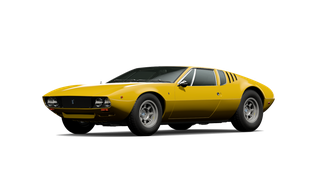
De Tomaso Mangusta '69
- Performance Point
- PP 485.05
- Group
- Gr.N
- Max Power
- 300 BHP / 6,000 rpm
- Max Torque
- 56.8 kgfm / 3,500 rpm
- DriveTrain
- MR
- Aspiration
- NA (Naturally Aspirated)
- Displacement
- 4,727 cc
- Manufacturer
- De Tomaso
- Length
- 4,275 mm
- Width
- 1,830 mm
- Height
- 1,100 mm
- Weight
- 1,185 kg
De Tomaso Mangusta '69: A 1960s Italian Supercar Icon
The De Tomaso Mangusta '69 stands as one of Italy's most memorable sports cars from the late 1960s, blending stunning design with distinctive engineering. Produced by De Tomaso, an Italian manufacturer with Argentinian founder Alejandro de Tomaso at the helm, the Mangusta debuted in 1967 and continued until 1971. The name "Mangusta," which translates to "mongoose" in Italian, was chosen as a sly nod to the animal's legendary rivalry with cobras—a subtle jab at the car's performance rivals in America, most notably the Shelby Cobra.
Styled by the celebrated Giorgetto Giugiaro at Ghia, the Mangusta features a dramatic, low-slung body with an unmistakable pair of gullwing doors over the engine bay. The car's futuristic looks made it a sensation at auto shows and a favorite among collectors and enthusiasts alike. Under the sleek exterior, the Mangusta was powered by a Ford V8 engine—initially a 4.7-liter unit for the European market and later a 4.9-liter engine for American customers. With approximately 305 horsepower on tap, it could accelerate from 0 to 60 mph in under seven seconds, offering impressive performance for its era.
While the De Tomaso Mangusta wasn't a dominant racing force like some of its Italian contemporaries from Ferrari or Lamborghini, it became a symbol of 1960s exotica, blending American power with Italian style. Its presence on the road, combined with relatively low production numbers—around 400 units were made—ensured its status as a rare and desirable collector's piece. Over the years, the Mangusta's unique combination of design and muscle has kept it in the spotlight, with increasing appreciation among classic car collectors and automotive historians.
Today, the De Tomaso Mangusta '69 is recognized as an automotive icon that represents an exciting experimental era in supercar history. Its blend of innovative styling, notable performance, and intriguing backstory continue to captivate enthusiasts, making it a sought-after gem at luxury auctions and a favorite in classic car exhibitions and media, including appearances in video games like Gran Turismo 7.