
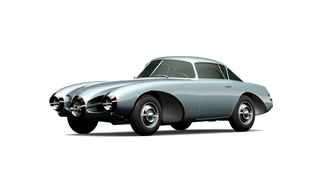
Abarth 1500 Biposto Bertone B.A.T 1 '52
- Performance Point
- PP 262.24
- Group
- Gr.N
- Max Power
- 73 BHP / 5,500 rpm
- Max Torque
- 10.1 kgfm / 4,000 rpm
- DriveTrain
- FR
- Aspiration
- NA (Naturally Aspirated)
- Displacement
- - cc
- Manufacturer
- Abarth
- Length
- 4,520 mm
- Width
- 1,650 mm
- Height
- 1,380 mm
- Weight
- 870 kg
Abarth 1500 Biposto Bertone B.A.T 1 '52: A Pioneering Collaboration in Automotive Design
The Abarth 1500 Biposto Bertone B.A.T 1 '52 stands as a significant milestone in automotive history, marking the early collaboration between three legendary names: Abarth, Bertone, and the genesis of the B.A.T (Berlinetta Aerodinamica Tecnica) project. Introduced in 1952, this unique prototype blended Abarth’s performance engineering with Bertone’s avant-garde styling, paving the way for a new era of concept cars that would influence design for decades.
Beneath its dramatic, wind-cheating silhouette, the Abarth 1500 Biposto Bertone B.A.T 1 was based on Fiat mechanicals, specifically the 1500 platform. Abarth, renowned for extracting the maximum performance from small displacement engines, tuned the 1.5-liter engine for reliability and efficiency. The Biposto, or 'two-seater,' was all about minimalism, performance, and futuristic design cues—an early embodiment of the GT (Gran Turismo) spirit.
The most distinctive characteristic of the B.A.T 1 '52 was its radical aerodynamics. Bertone’s young designer, Franco Scaglione, worked tirelessly to achieve a drag coefficient as low as possible, resulting in the now-iconic swooping fender lines, dramatic tail fins, and covered wheels. These innovations would be further developed in later B.A.T cars, making the B.A.T 1 a true pioneer. Although the car never saw mass production or major racing victories, its influence on both concept car design and the mainstream automotive aesthetic was profound.
While the Abarth 1500 Biposto Bertone B.A.T 1 '52 did not compete in major international racing events, it succeeded as a showpiece at automobile exhibitions. It demonstrated the power of collaboration between motoring icons and the impact of daring design on public imagination. Today, the B.A.T 1 is highly sought after by collectors and remains a source of inspiration for modern automotive designers, representing a timeless symbol of Italian ingenuity and style in the golden age of motoring.